
Housing after treatment: sober living, subsidized units, and common barriers
The discharge paperwork says you are ready. Your counsellor says you are ready. The treatment programme was twelve weeks of intensive group therapy, individual sessions, medical stabilisation and relapse prevention planning, and by every clinical measure, you completed it successfully. Then you walk out the front door with a discharge bag, a list of community resources and nowhere to sleep tonight. This is the moment that the addiction treatment system calls "transition" and that the housing system does not call anything at all, because the housing system does not have a category for you. You are not homeless in the traditional sense — you have not been sleeping rough. You are not a priority for social housing — you do not have dependents. You are not eligible for emergency accommodation in most jurisdictions — you are not fleeing domestic violence. You are a person who has just completed treatment and needs a stable, substance-free place to live, and the gap between that need and the available options is where more relapses happen than any other point in the recovery journey.
Why housing is the foundation of recovery
The clinical literature has been clear for over two decades: stable housing is the single strongest predictor of sustained recovery after treatment. A 2019 study published in the Journal of Substance Abuse Treatment found that individuals who entered stable housing immediately after completing residential treatment were 2.5 times more likely to remain abstinent at six months than those who returned to unstable housing. The reason is not mysterious. Recovery requires routine, safety, distance from triggers and a social environment that supports sobriety. None of these conditions exist in the housing situations that most people leaving treatment return to: the same apartment where they used, the same neighbourhood where they bought, the same roommate who still drinks, or no fixed address at all.
Treatment programmes address the medical and psychological dimensions of addiction. They rarely address the housing dimension, because housing is not a clinical service — it is a social service, managed by a different sector, funded through different mechanisms and governed by different eligibility criteria. The handoff between a treatment provider and a housing provider is the weakest link in the recovery chain, and the people who fall through it are the people most likely to return to active use within weeks of discharge.
The post-treatment housing landscape
The housing options available to someone leaving treatment fall into four broad categories, each with different structures, costs, eligibility requirements and levels of support. Understanding the distinctions is essential because choosing the wrong type of housing can be as damaging as having no housing at all.
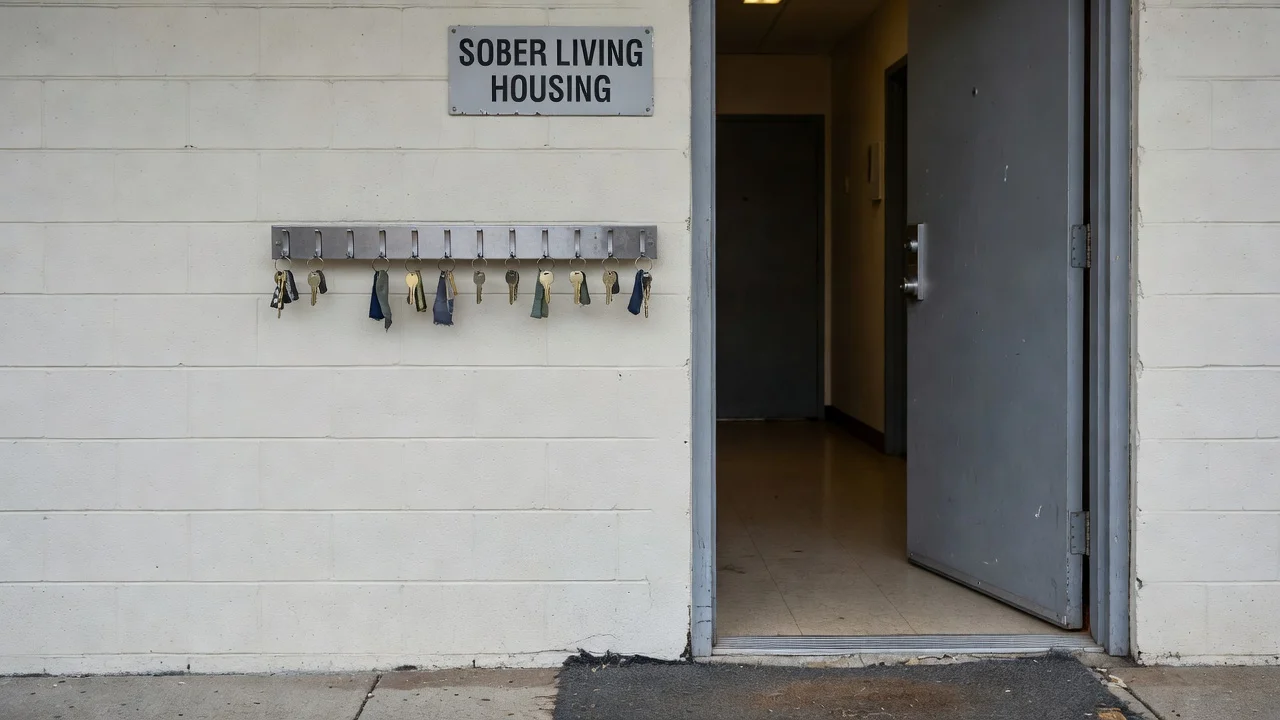
Sober living homes are the most recovery-specific option. These are residential properties operated to provide a substance-free living environment for people in recovery. They are not treatment facilities — they do not provide therapy, medical care or clinical services. They provide structure, peer support, house rules and an environment where substance use is prohibited. Some are certified and regulated, others operate informally. The quality varies enormously, and the lack of consistent regulation in most jurisdictions means that the label "sober living home" can describe anything from a well-run, supportive community to a cramped house with no oversight where the only rule is a rent payment.
Halfway houses occupy a middle ground between treatment and independent living. They are typically more structured than sober living homes, often require participation in treatment programmes or regular drug testing, and are frequently funded or contracted by government agencies or courts as a condition of release. Halfway houses are time-limited — most stays range from three to six months — and are designed to transition residents into permanent housing.
Subsidized housing units are apartments or houses where the rent is reduced through a government subsidy, typically administered through a housing authority or a voucher programme. These are not recovery-specific — they are general affordable housing — but they are frequently used by people in recovery who cannot afford market-rate rent. The application process is long, the waiting lists are measured in years in many cities, and the eligibility criteria are strict.
Permanent supportive housing combines subsidized rent with on-site support services, including case management, counselling and sometimes medical care. This model is designed for individuals who have both housing needs and support needs — frequently people with co-occurring substance use disorders and mental health conditions or chronic homelessness. It is the most comprehensive option but also the most resource-intensive and the hardest to access.
The comparison below maps the key characteristics of each housing type to help identify which option matches your situation, budget and timeline.
| Housing type | Typical cost per month | Length of stay | Support level | Entry barriers | Best suited for |
|---|---|---|---|---|---|
| Sober living home | $400–$1,200 (self-pay) | 3–12 months, flexible | Peer support, house rules, no clinical services | Low to moderate; most require interview and commitment to sobriety | Individuals leaving treatment who need a substance-free environment with peer accountability |
| Halfway house | $0–$800 (often subsidized) | 3–6 months, fixed | Structured, may include mandatory treatment or drug testing | Moderate; often requires referral from treatment provider or court | Individuals needing structured transition with accountability and possible legal mandate |
| Subsidized housing unit | 30% of income (Section 8/HUD) or fixed low rent | Long-term, indefinite | Minimal; independent living with optional services | High; long waiting lists, strict eligibility, background checks | Individuals with stable income or benefits who can live independently at reduced rent |
| Permanent supportive housing | 30% of income or nominal rent | Long-term, indefinite | High; on-site case management, counselling, medical support | Very high; typically requires documented homelessness or disability | Individuals with co-occurring disorders, chronic homelessness or complex needs |
| Oxford House (specific model of sober living) | $100–$250 per week | Indefinite, self-governed | Peer-run, democratic, no professional staff | Low; requires acceptance by existing house members | Individuals who want long-term sober living without clinical oversight |
The most important pattern is that cost and support level are inversely related to accessibility. The options with the most support — permanent supportive housing — are the hardest to access, with waiting lists that can exceed two years in major cities. The options that are easiest to access — sober living homes — require self-payment and provide the least professional support. The person leaving treatment with limited funds and no prior housing arrangement is caught in the gap: the housing they can afford provides minimal support, and the housing that provides adequate support takes months or years to access.
Sober living homes: the most accessible — and most variable — option
Sober living homes are the housing option that most people leaving treatment will encounter first, because they are the only category that does not require a government referral, a waiting list or a background check. You find a sober living home, you call, you interview, you move in. The barrier to entry is low, which is both their greatest strength and their greatest risk.
A well-run sober living home provides a structured, substance-free environment where residents support each other's recovery. House rules typically include abstinence from alcohol and drugs, attendance at house meetings, participation in household chores, adherence to a curfew and payment of weekly or monthly rent. Some homes require attendance at external recovery meetings (AA, NA or SMART Recovery), while others leave recovery programme participation to individual choice. The best homes are certified through a state or national accreditation body, employ a house manager who lives on-site and conduct regular drug testing to ensure compliance.
The Oxford House model deserves specific mention because it is the most widely studied and most structured form of sober living. Oxford Houses are peer-run — there is no professional staff, no clinical services and no external management. Residents democratically govern the house, elect officers, approve new members and enforce house rules. There are over 3,000 Oxford Houses in the United States, and research funded by the National Institute on Drug Abuse has shown that Oxford House residents have significantly better outcomes than individuals returning to their previous living situations, with abstinence rates of 65 to 87 percent at one year.
The risk with unregulated sober living homes is real. In jurisdictions without certification requirements, anyone can open a house, call it a sober living home and charge rent to people in recovery. The absence of regulation has led to documented cases of exploitative operators who pack residents into unsafe properties, charge excessive rent, provide no oversight and tolerate or even facilitate relapse. The worst cases involve operators who refer residents to specific treatment programmes in exchange for kickbacks — a practice known as "body brokering" that exploits the vulnerability of people in early recovery.
Subsidized housing: the long road to stability
Subsidized housing is the route to long-term, independent housing at a rent that someone on a limited income can afford. In the United States, the primary mechanism is the Housing Choice Voucher programme (Section 8), which pays the difference between what a tenant can afford (typically 30 percent of income) and the market rent for a unit. In the United Kingdom, social housing is allocated through local authorities and housing associations based on need. In Canada, subsidized housing is administered provincially with federal support through the National Housing Strategy. In Australia, social housing is managed by state housing authorities.
The eligibility criteria for subsidized housing typically include income limits (usually defined as a percentage of area median income), residency requirements and background checks. A criminal record related to drug offences does not automatically disqualify an applicant, but it can extend the review process and limit available options. Some housing authorities have policies that exclude individuals with recent drug-related convictions, though these policies have been successfully challenged under fair housing laws in several jurisdictions.
The defining characteristic of subsidized housing is the waiting list. In most major cities, the wait for a voucher or a subsidized unit is measured in years, not months. In high-demand areas like New York, London or Sydney, the waiting list can be five to ten years. Some housing authorities have stopped accepting new applications entirely because the existing list is too long. This means that subsidized housing is not a solution for the immediate post-treatment period — it is a long-term goal that requires early application and patient navigation of a bureaucratic system.
Common barriers that prevent people from securing housing
The obstacles between a person leaving treatment and a stable place to live are not just logistical. They are structural, financial, legal and social, and they interact in ways that make each barrier harder to overcome individually. Recognising these barriers before discharge allows for planning that can address them proactively rather than reactively.
The barriers most frequently encountered by people seeking housing after treatment include:
- Lack of income or employment — treatment programmes rarely result in job placement, and most people leaving treatment do not have stable income. Without income, market-rate housing is impossible, and even sober living homes at $400 per month may be unaffordable. Subsidized housing requires income verification, which creates a catch-22: you need housing to get a job, and you need a job to get housing.
- Criminal record — drug-related convictions, which are common among people with substance use disorders, create barriers in both private and subsidized housing. Private landlords frequently reject applicants with criminal records, and some subsidized housing programmes have exclusionary policies. While fair housing laws in some jurisdictions limit how far back a landlord can look, the practical effect is that a conviction narrows the available housing pool significantly.
- Poor credit history — active addiction often destroys credit. Unpaid bills, defaulted loans and evictions create a credit profile that most private landlords will reject. Even subsidized housing programmes may review credit history, and while a poor credit score does not automatically disqualify, it extends the review process and can be used as a basis for denial in some programmes.
- Prior eviction — an eviction on your record is one of the most damaging barriers in the housing search. Many landlords use automated screening services that flag any eviction, regardless of the reason or the outcome. An eviction related to substance use — noise complaints, property damage, non-payment while using — follows you for years and narrows options dramatically.
- Lack of documentation — people leaving treatment frequently lack the documents needed to apply for housing: identification, proof of income, references from previous landlords, bank statements. Treatment programmes do not typically help patients gather these documents, and replacing lost or expired ID takes time and money.
- No rental history or references — first-time renters, or people whose rental history is interrupted by addiction, may have no landlord references to offer. Without references, private landlords are reluctant to take a risk, and the cycle of "no housing without references, no references without housing" begins.
- Stigma and discrimination — despite legal protections, landlords and neighbours frequently discriminate against people in recovery. A history of addiction, even if disclosed voluntarily, can lead to application rejections that are framed as "other candidates were more suitable." Proving discrimination is difficult, and most people do not have the resources to pursue a legal claim.
- Limited supply in high-cost areas — the affordable housing crisis affects everyone, but it affects people in recovery disproportionately because they have fewer financial resources and more barriers to the private market. In cities where a one-bedroom apartment costs $1,800 per month and the waiting list for subsidized housing is seven years, the gap between treatment and housing is not a crack — it is a chasm.
- Lack of coordination between treatment and housing systems — treatment providers are not housing providers, and in most systems, there is no formal referral pathway between the two. A person leaving treatment is given a list of phone numbers and told to call. The housing agencies they call do not know they are coming from treatment and treat them like any other applicant. The absence of a coordinated handoff is the structural reason why so many people leave treatment and relapse within weeks.
- Mental health co-occurring conditions — many people with substance use disorders also have mental health conditions that complicate housing. Depression, anxiety, PTSD and personality disorders can make it harder to navigate applications, maintain tenancy and manage the social demands of shared housing. Without integrated support, the mental health condition undermines the housing placement and the housing instability undermines the mental health treatment.
These barriers do not exist in isolation. A person leaving treatment may face three or four of them simultaneously, and each one compounds the others. The criminal record prevents private rental, the lack of income prevents market-rate options, the waiting list prevents immediate subsidized housing, and the stigma prevents informal arrangements. Understanding the combination of barriers that apply to your specific situation is the first step toward developing a strategy that addresses all of them rather than one at a time.
Practical steps to secure housing after treatment
The barriers are real, but they are not insurmountable. People in recovery secure stable housing every day, and the ones who succeed are not the ones with the most resources — they are the ones who plan early, use every available programme and refuse to accept the first rejection as final. The process is not linear, and it requires persistence, but a structured approach increases the odds of finding housing before the window of post-treatment motivation closes.
A step-by-step approach to securing housing after treatment:
- Start before discharge. The single most important factor in successful post-treatment housing is starting the search before you leave the programme. Ask your treatment provider's social worker or discharge planner about housing options on your first week, not your last. Many treatment programmes have relationships with local sober living homes and can make warm referrals that bypass the normal application process.
- Gather your documents. You will need identification (passport, driver's licence or state ID), proof of income (benefits award letter, pay stubs or a letter from your treatment provider confirming your transition), your Social Security card or national insurance number, and any legal name-change documentation if applicable. If you do not have these documents, begin replacing them immediately — some take weeks to arrive.
- Apply for subsidized housing immediately, even if the wait is long. The waiting list for subsidized housing is years long in most cities, but the clock starts when you submit the application. If you do not apply, you will never get off the waiting list. Apply to every housing authority and programme you are eligible for — Section 8, public housing, state housing, housing association properties. Some programmes have shorter waits for specific populations, such as people with disabilities or people experiencing homelessness.
- Contact your local recovery community organisation. Recovery community organisations (RCOs) are peer-led nonprofits that support people in recovery. Many maintain lists of reputable sober living homes in the area, provide referrals and sometimes offer financial assistance for the first month's rent. They are also the best source of information about which sober living homes are well-run and which to avoid.
- Obtain a letter from your treatment provider. A letter stating that you have completed treatment, are in recovery and are committed to maintaining a substance-free lifestyle can serve as a character reference for sober living homes and sometimes for private landlords. It does not need to specify your diagnosis — it confirms your commitment to recovery and your engagement with treatment.
- Interview sober living homes carefully. Treat the intake interview as a two-way conversation. Ask about house rules, drug testing policies, the house manager's qualifications, how long current residents have been there and what happens if someone relapses. Visit the house in person if possible. A home that will not let you visit before moving in is a red flag.
- Explore transitional housing programmes. Many cities have transitional housing programmes specifically for people in recovery, funded through SAMHSA (Substance Abuse and Mental Health Services Administration) in the US or equivalent bodies in other countries. These programmes typically offer 6 to 24 months of subsidized housing with on-site support services. Your treatment provider or local social services department can identify programmes in your area.
- Use benefits and entitlements to build income. If you are not working, apply for every benefit you are eligible for: disability benefits, unemployment, food assistance and housing benefit. These benefits provide the income floor that makes subsidized housing viable and pays for sober living rent while you search for longer-term options.
- Build a rental history through sober living. Time in a sober living home can serve as a rental reference. If you pay rent on time, follow house rules and maintain sobriety, the house manager can provide a reference that helps you secure private rental or subsidized housing when you are ready to move on.
- Seek legal advice if you face discrimination. If you are denied housing because of your recovery status, your criminal record or your disability, you may have a claim under fair housing law. Contact a fair housing organisation, a legal aid clinic or an employment and housing solicitor for advice. Discrimination in housing based on disability — including recovery from substance use disorder — is illegal under the Fair Housing Act in the US, the Equality Act in the UK and equivalent legislation in other jurisdictions.
Following these steps does not guarantee housing, but it transforms a chaotic, reactive search into a structured, proactive process. The difference between the person who finds housing after treatment and the person who does not is rarely resources. It is planning, persistence and the knowledge of which doors to knock on and in what order.
Legal protections: what you are entitled to
The law provides more protection than most people in recovery are aware of, but the protections are only effective if you know they exist and are willing to invoke them. In the United States, the Fair Housing Act prohibits discrimination based on disability, and substance use disorder is recognised as a disability for individuals who are in recovery and not currently using illegal drugs. This means a landlord cannot refuse to rent to you, evict you or charge you different rent because you are in recovery. The Fair Housing Act also requires landlords to make reasonable accommodations, such as allowing a support animal or adjusting lease terms to accommodate treatment appointments.
In the United Kingdom, the Equality Act 2010 may protect individuals in recovery if their condition meets the threshold of a disability. Housing providers — including private landlords, housing associations and local authorities — must not discriminate against tenants or applicants based on a protected characteristic. The Homelessness Reduction Act 2017 also places duties on local authorities to help people who are homeless or threatened with homelessness, including people leaving treatment who have no stable housing.
In Canada, provincial human rights codes prohibit discrimination based on disability in housing, and substance use disorder is recognised as a disability in most provinces. In Australia, the Disability Discrimination Act 1992 provides similar protections. In the European Union, the Race Equality Directive and the Employment Equality Directive do not explicitly cover housing discrimination based on disability, but most member states have national legislation that does.
The practical challenge is enforcement. Proving that a landlord denied your application because of your recovery status rather than your income or credit history is difficult, and most cases rely on circumstantial evidence: inconsistent explanations from the landlord, statements made during viewings, or patterns of rejection that suggest bias. Fair housing organisations can help test for discrimination by sending paired applicants — one with a recovery history and one without — to the same landlord and comparing the responses.
Predatory and unsafe housing: what to avoid
Not all post-treatment housing is helpful, and some of it is actively harmful. The lack of regulation in the sober living sector means that predatory operators can exploit people in recovery who are desperate for housing and have limited options. Knowing the warning signs can prevent you from entering a situation that undermines your recovery rather than supporting it.
A sober living home that does not enforce its rules is not a sober living home — it is a house where people pay rent. If drug use is tolerated, if curfews are not enforced, if house meetings are optional and unattended, the environment is not supporting recovery. A home that requires you to attend a specific treatment programme or work with a specific counsellor may be receiving kickbacks for referrals and is prioritising revenue over your recovery. A home that takes your benefits cheque directly rather than requiring you to pay rent yourself is exercising financial control that is a red flag for exploitation. A home that will not let you visit before moving in, that cannot introduce you to current residents or that has a high turnover of occupants is likely not providing the stability that recovery requires.
The worst situations involve operators who actively recruit people in recovery, offer free or very low-cost housing and then exploit them through insurance fraud, body brokering or labour arrangements that amount to indentured servitude. These operations exist, they are more common than the public realises, and they prey specifically on the vulnerability of people who have just completed treatment and have nowhere else to go. If a housing arrangement sounds too good to be true — free rent, no questions asked, immediate move-in — it almost certainly is.
Building toward long-term stability
Securing housing after treatment is not the end of the journey — it is the beginning. The transition from sober living or transitional housing to permanent, independent housing is the next phase, and it requires its own planning. While in sober living, use the time to build income, repair credit, save for a deposit and establish a rental history. Attend every appointment, follow every rule and document your stability, because each month of successful sober living tenancy is a building block for the next housing application.
The research is clear that people who stay in sober living for six months or longer have significantly better outcomes than those who leave after a few weeks. The temptation to move into your own apartment as soon as you can afford it is strong, but premature independence is a common relapse trigger. The structure, peer support and accountability of sober living provide a buffer that individual living does not. The decision to move on should be based on the stability of your recovery, not the availability of a deposit.
Housing is not a reward for recovery. It is a precondition for it. The people who build lasting sobriety are overwhelmingly the people who found stable housing first, and the people who relapse are disproportionately the people who tried to build recovery on an unstable housing foundation. The system does not make this easy. The waiting lists are long, the barriers are high and the options are limited. But the options exist, the legal protections exist and the pathway from treatment to stable housing is navigable for those who know the steps and have the persistence to follow them.